IT
IT


A fresh and engaging interpretation of the Permanent Collection, highlighting the thematic and chronological connections between the works on display.
Cardinals' Apartments
The 18th Century at Palazzo Sciarra Colonna
In the eighteenth century, Cardinal Prospero Colonna di Sciarra oversaw the adaptation of the palace to the style of the period. The architectural and decorative renovation also involved the architect Luigi Vanvitelli, a friend of the Cardinal, who designed the restructuring.
The Cardinal’s Library and the Cabinet of Mirrors, both richly adorned with painted decorations, are among the spaces created during these interventions, which enhanced the historical and artistic value of the palace.
Until 10 January 2027, the Cardinal’s Apartment can be visited on the “Family Secrets” guided tour, on the first and third weekends of the month, combined with the Saint Francis exhibition.
The Cardinal’s Library
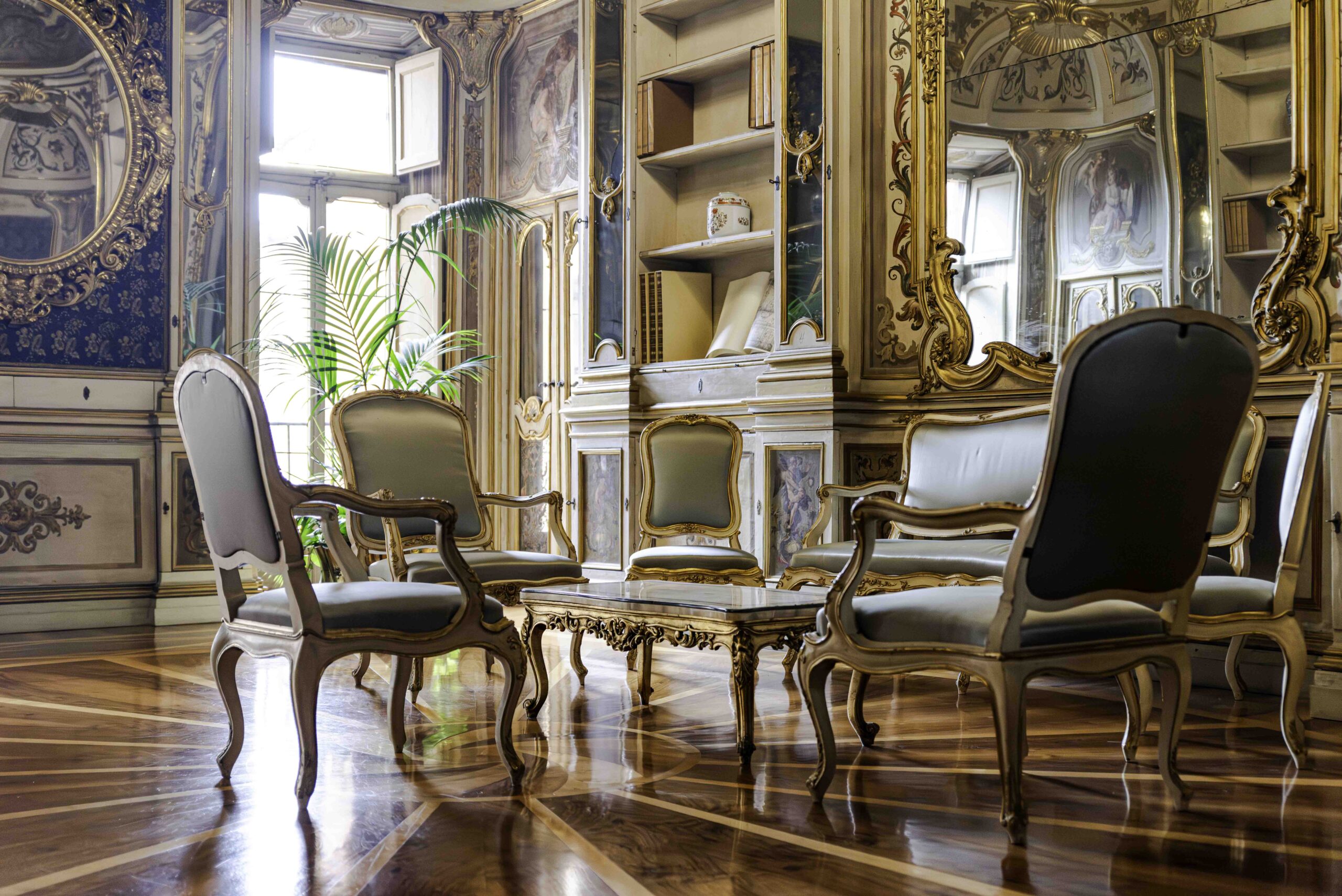
The Cardinal’s Library, like the adjacent Cabinet of Mirrors, preserves its original eighteenth-century arrangement intact. The architect decided to transform the rectangular layout of the pre-existing seventeenth-century room into a more articulated interior, creating four corner bays resembling niches, and intervening only on the upper section of the walls.
The result is a space of understated elegance, in harmony with the Rococo taste. Stefano Pozzi was commissioned to decorate the surfaces.
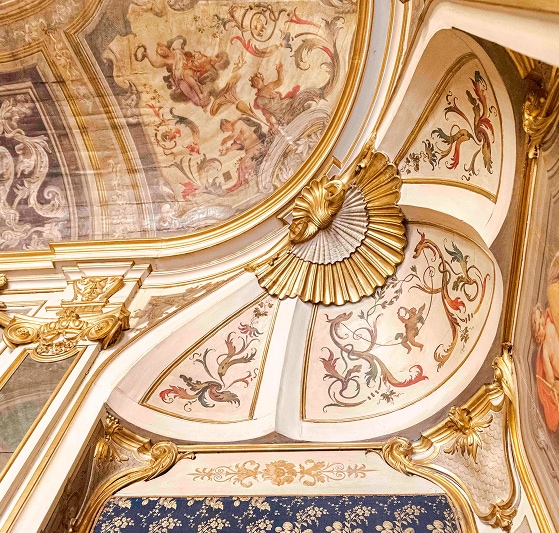
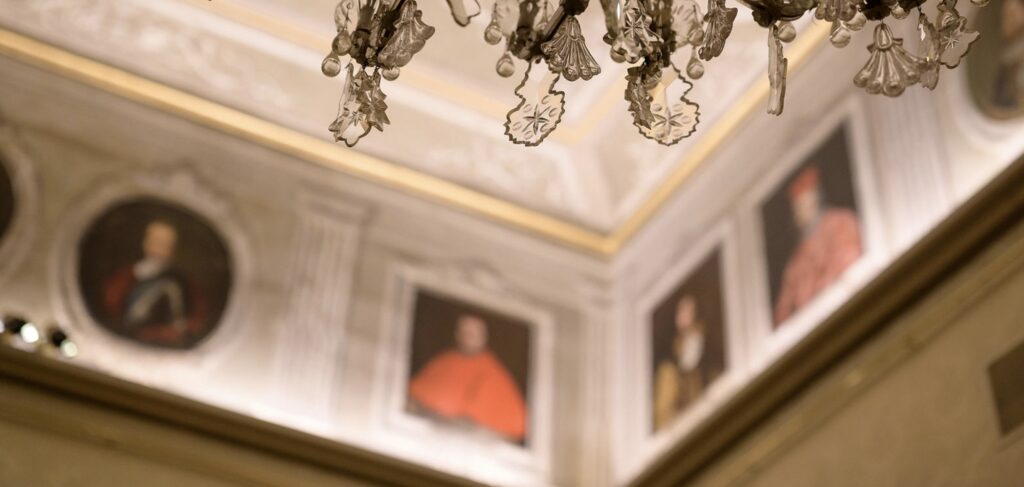
Detail of the Cardinal's Library, Cardinal Prospero Colonna's Apartments, Palazzo Sciarra Colonna
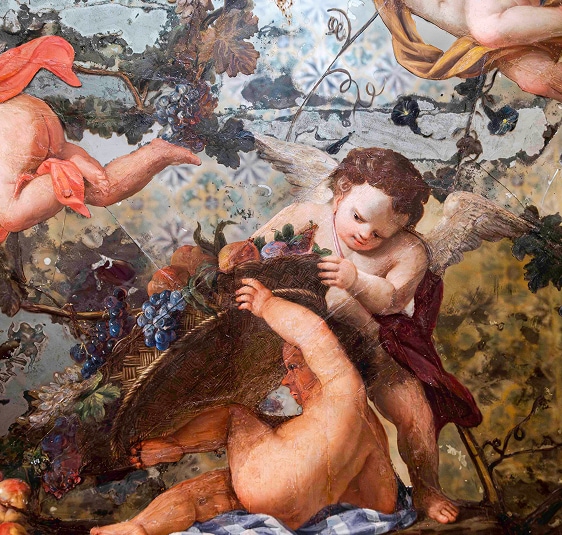
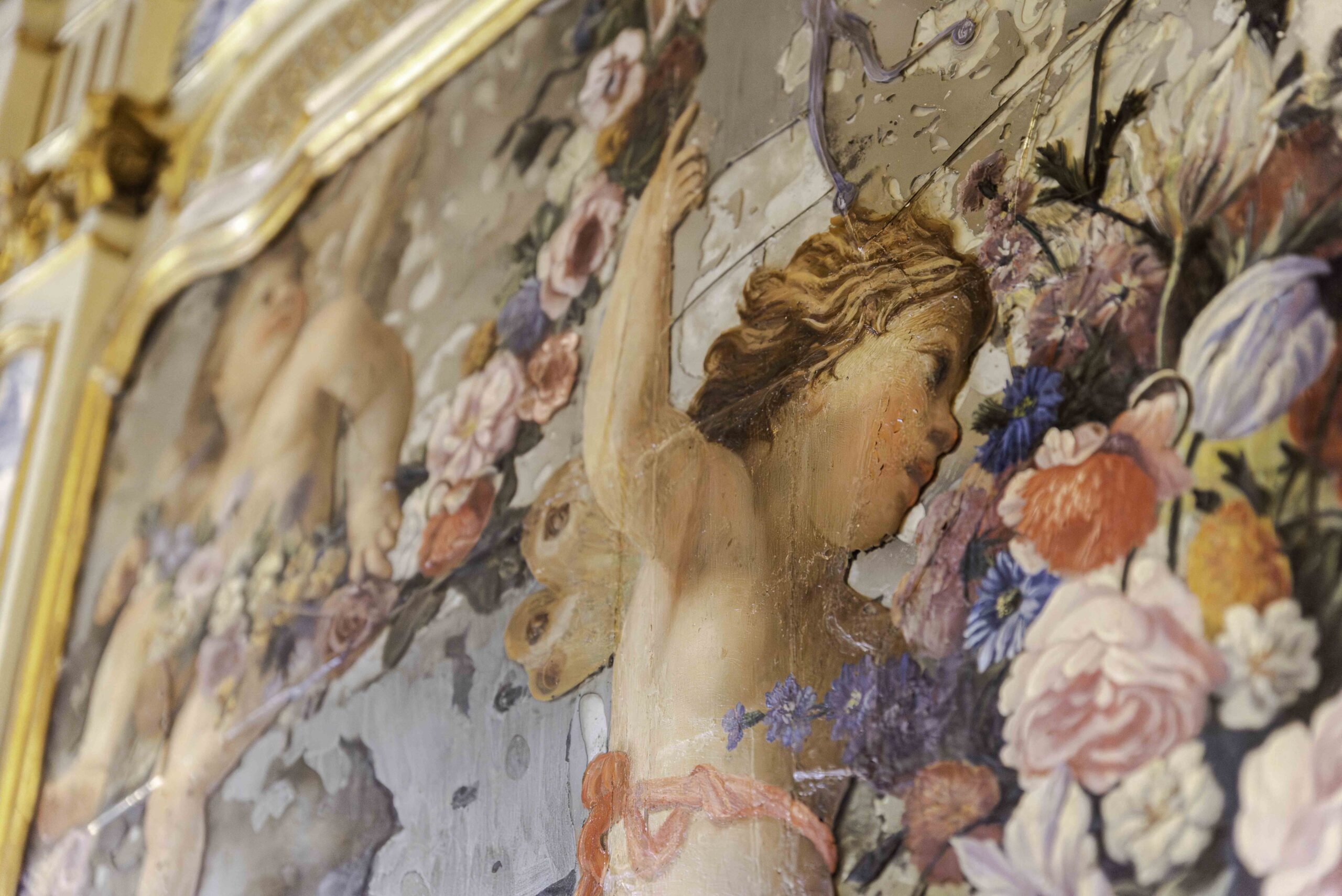
Detail of the Decoration with Putto, Cardinal Prospero Colonna's Apartments, Palazzo Sciarra Colonna
Boiserie, painting, and symbols of the era
The walls are entirely covered with boiserie in white and gold, within which seven large bookcases are carved out.
The room’s rich decorative program unfolds along two thematic lines that allude both to the prestigious offices held by the Cardinal and to the concept of Time, as well as to the function of the space as a place for reflection and study.
The Cabinet of Mirrors
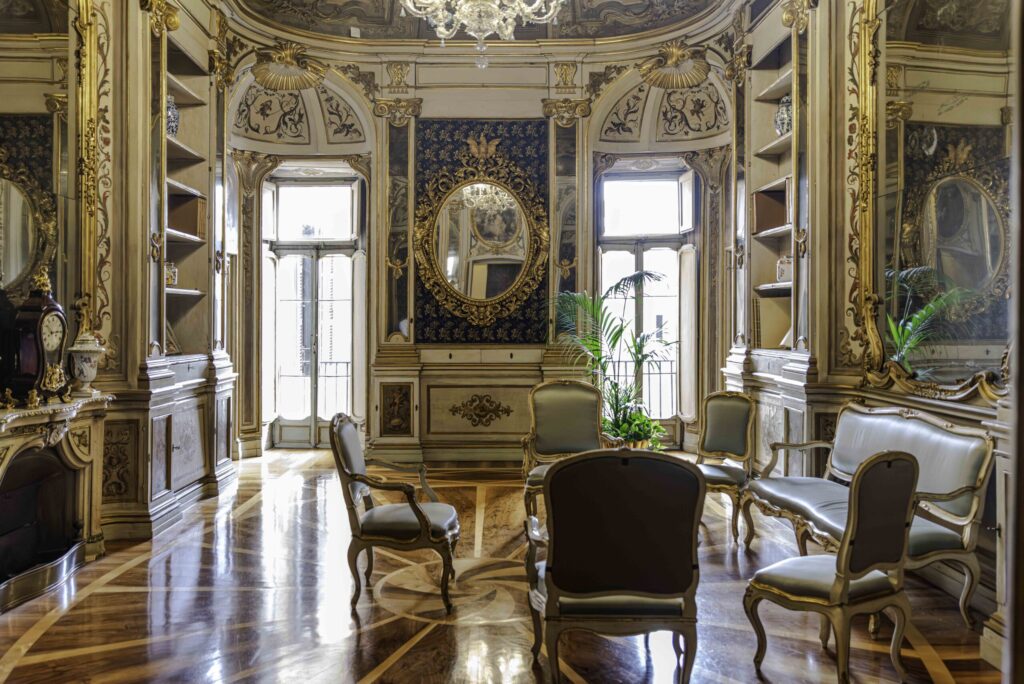
The Cabinet of Mirrors, overlooking what was once the Courtyard of the Stables, still retains a remarkably bright and lively appearance. Thanks to the precious materials used and the refined design of its fixed furnishings, it represents an example of great decorative elegance, reflecting the Rococo taste and the fashion for chinoiseries.
The layering of genres and styles within the space creates a pleasing eclecticism. The mirrors and porcelains that decorate the Cabinet illusorily expand the dimensions of the small room, enhancing the splendor of the gilded frames and the boiserie that lines the walls.
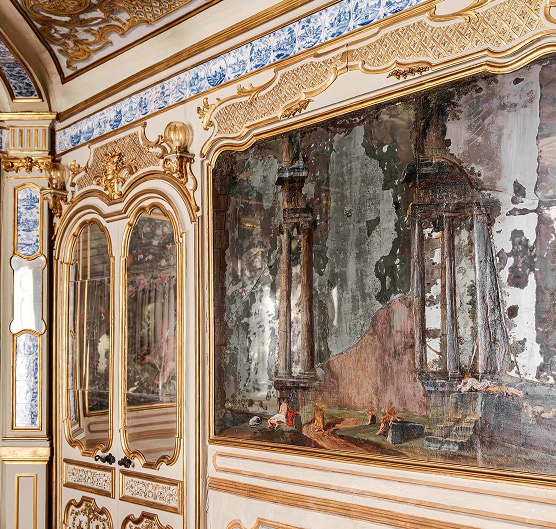
Architectural Capriccio, Decoration of the Cabinet of Mirrors, Cardinal Prospero Colonna's Apartments, Palazzo Sciarra Colonna