IT
IT


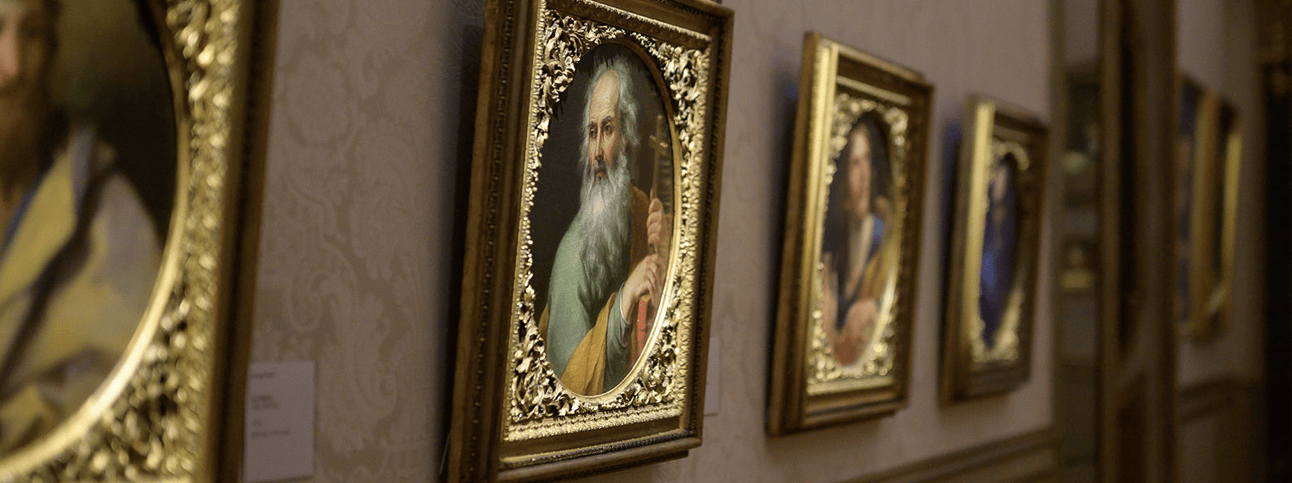
A fresh and engaging interpretation of the Permanent Collection, highlighting the thematic and chronological connections between the works on display.
Collection
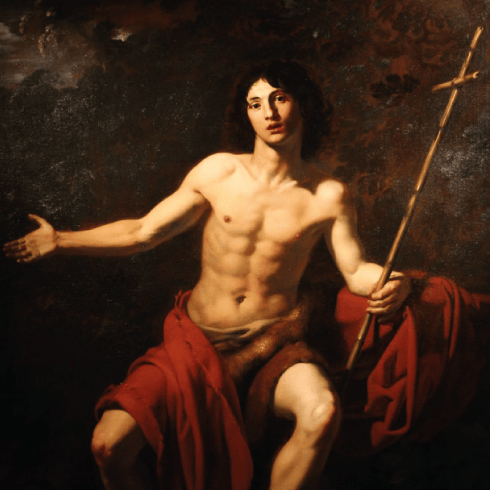
Depiction of Saint John the Baptist
Pompeo Batoni
Palazzo Sciarra Colonna
Over the course of its long history, Palazzo Sciarra Colonna once housed one of the most prestigious private art collections in Rome, featuring paintings by Perugino, Sebastiano del Piombo, Titian, Guido Reni, and Caravaggio.
Dispersed at the end of the nineteenth century following the sensational sales to which Prince Maffeo Barberini Colonna di Sciarra was compelled, that historic collection finds an ideal form of restitution in the present display, which focuses on the history of Roman art and on the works of artists who lived and worked in the capital from the fifteenth century to the present day.
EXHIBITION ROUTE – PERMANENT COLLECTION
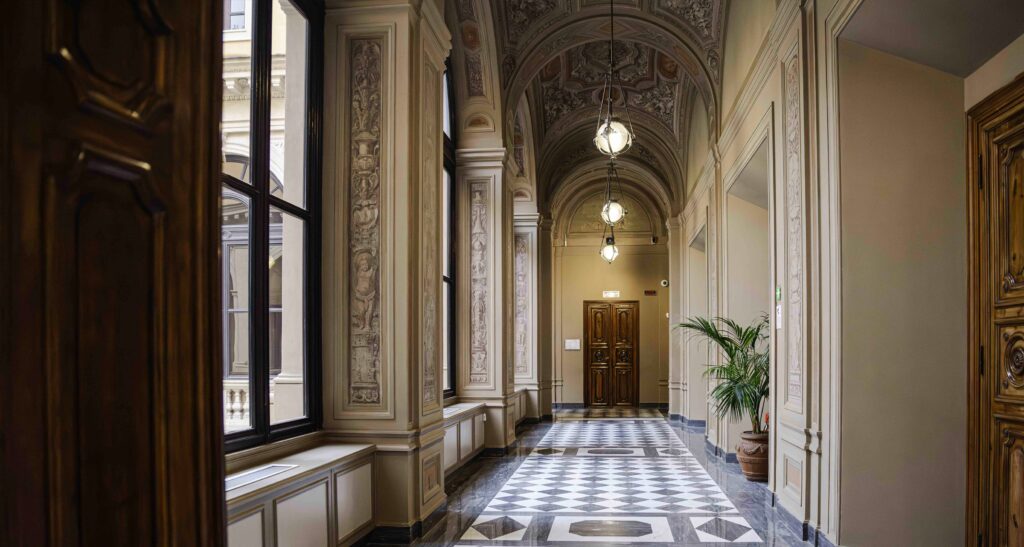
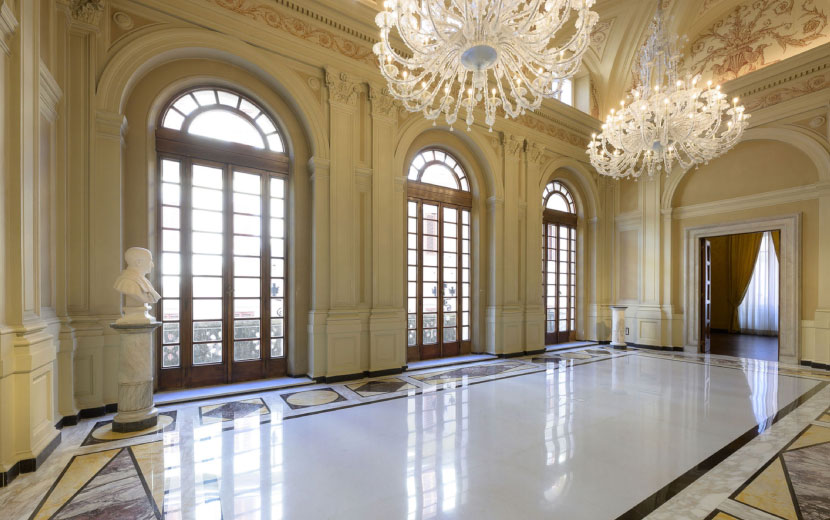
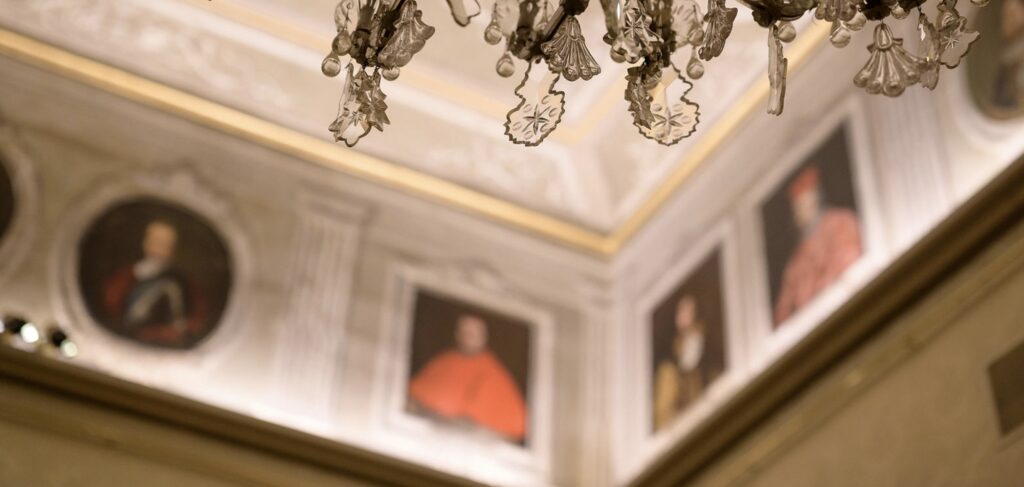
The exhibition route on the piano nobile unfolds through the rooms arranged along the sides of the courtyard, the result of nineteenth-century renovations commissioned by Prince Maffeo Barberini Colonna di Sciarra and carried out by the architect Francesco Settimi.
Today, these spaces appear to the public in a renewed form, redesigned to offer an original and engaging interpretation of the collection, emphasizing thematic as well as chronological affinities among the displayed works.
Download the Audioguide
Gallery
Today Palazzo Sciarra Colonna represents the heart of the Museo del Corso – Polo museale. Inside it houses a rich Permanent Collection, recently rearranged in the spaces of the piano nobile, which have undergone renovation work. The new exhibition layout rethinks the spaces and the arrangement of the works, offering the public an original and engaging interpretation of the collection.
The exhibition is organized into thematic sections that highlight the deep connection between art and the city of Romeacross the centuries, following a chronological itinerary spanning four hundred years of history. The journey begins with masterpieces from the fifteenth century, including the Imago Pietatis attributed to Piermatteo d’Amelia, and continues through seventeenth-century Roman painting, featuring Pietro da Cortona as one of its leading figures, before arriving at the views and landscapes of the eighteenth century.
The exhibition route unfolds across seven rooms arranged around the courtyard, itself the result of the nineteenth-century renovations commissioned by Prince Maffeo Barberini Colonna di Sciarra and carried out by the architect Francesco Settimi: the Hall of Columns, also known as the Hall of the Monte di Pietà; the Medal Room; two rooms dedicated to early and late seventeenth-century Roman art; the Landscape and View Room; and the Portrait and Reception Rooms.
The collection consists primarily of paintings, but also includes antique furnishings, sculptures — among them Madonna and Child by Alessandro Algardi — tapestries, embossed leather wall coverings, as well as valuable collections of numismatics and glyptics.
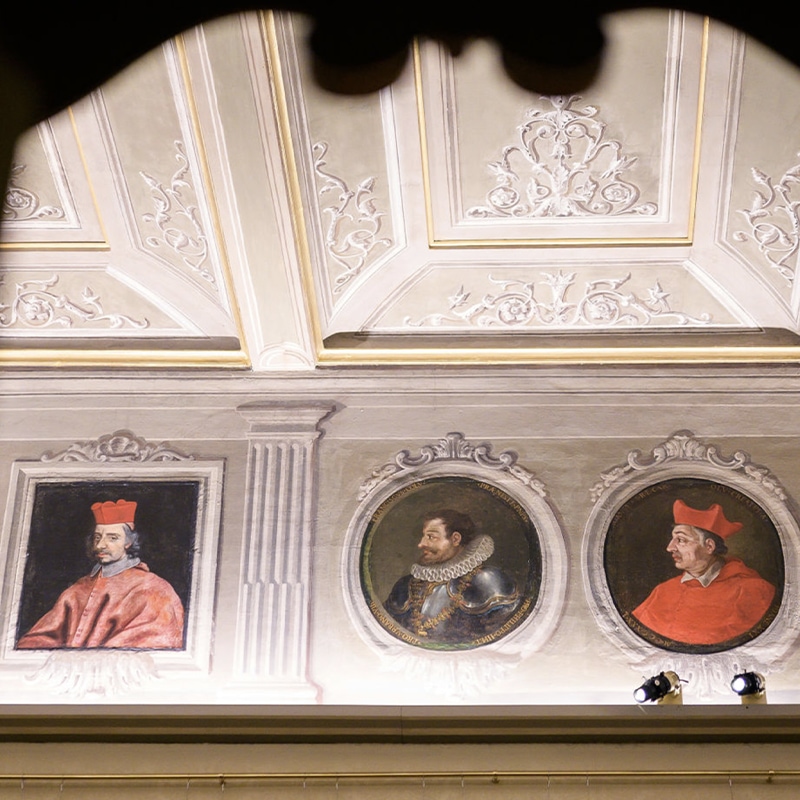
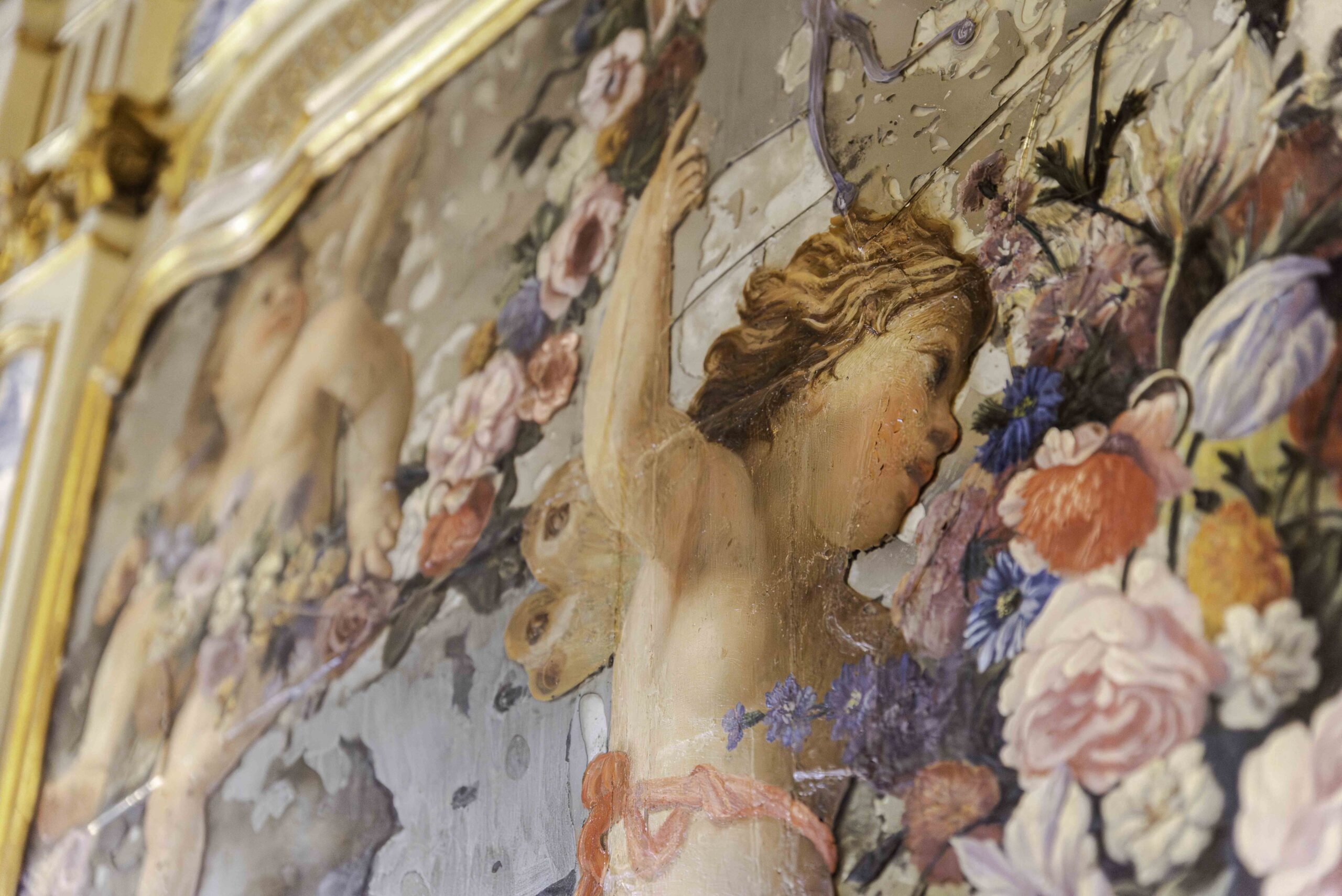
Decorative Wall Artwork at Palazzo Sciarra Colonna
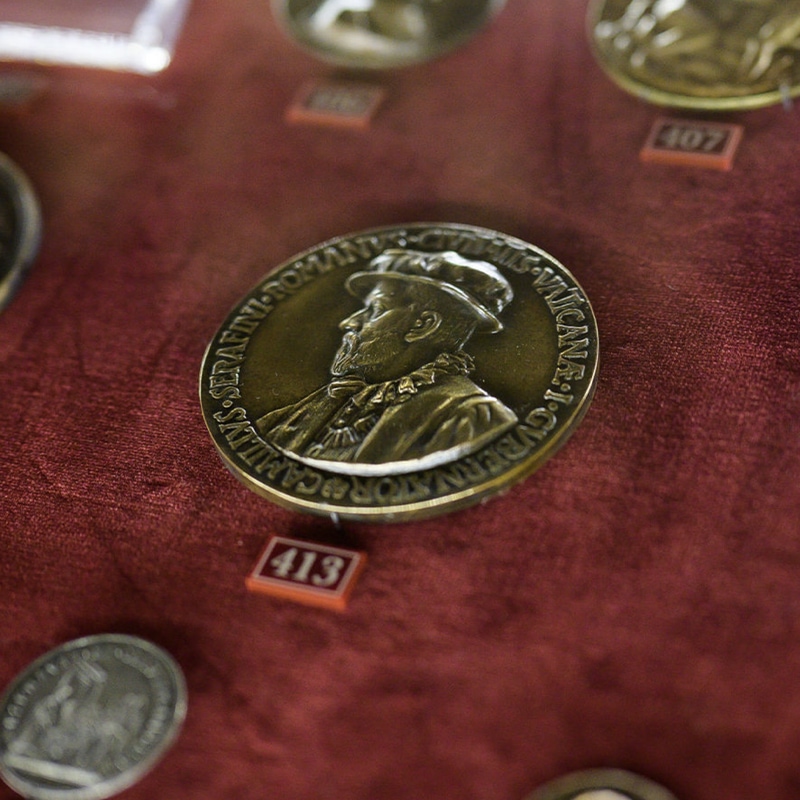
Renaissance Medal with a Portrait of Francesco Guicciardini
Medal Collection
The art collection of Museo del Corso – Polo museale is further enriched, at Palazzo Sciarra Colonna, by the display of a selection of four hundred pieces from the valuable numismatic collection of Fondazione Roma. The collection comprises more than two thousand five hundred examples of papal medals and coins, some of which are unique or extremely rare, ranging from the fifteenth century to the present day.
Reflecting six centuries of papal history, the Foundation’s numismatic collection can be considered second only to that of the Vatican Apostolic Library in terms of both quantity and quality. It is housed in the Medal Room, named after the large elliptical medal cabinet placed at its center. An interactive display allows visitors to explore each exhibited piece, retracing its historical origins and appreciating even the finest details.
The vault
Palazzo Cipolla preserves hidden treasures within what was once the vault of the historic Cassa di Risparmio di Roma. While retaining its original function as a “safe,” the vault has been reimagined as an accessible space — an archive of painted treasures open to the public and designed around a new educational itinerary.
Octagonal in shape, the space features eight vertical walls forming the central pillar, which host an original journey through stories from the Bible, facing eight horizontal walls. One of these is entirely occupied by the monumental steel vault door which, through a semantic shift, elevates the artworks preserved here to the status of gold reserves within the art collection displayed at Palazzo Sciarra Colonna.
Subverting a chronological approach, the display is organized around thematic and genre-based sections, with the exception of the final large wall, which presents representative works from the extensive contemporary art collection of Fondazione Roma, featuring artists such as Thomas Jones Barker, Lucio Fontana, Giuseppe Capogrossi, and Francesco Trombadori.
Each wall is conceived as a chapter in a visual narrative that invites reflection on both sacred and secular iconography, as well as on the evolution of artistic languages and pictorial genres such as portraiture, landscapes, and city views.
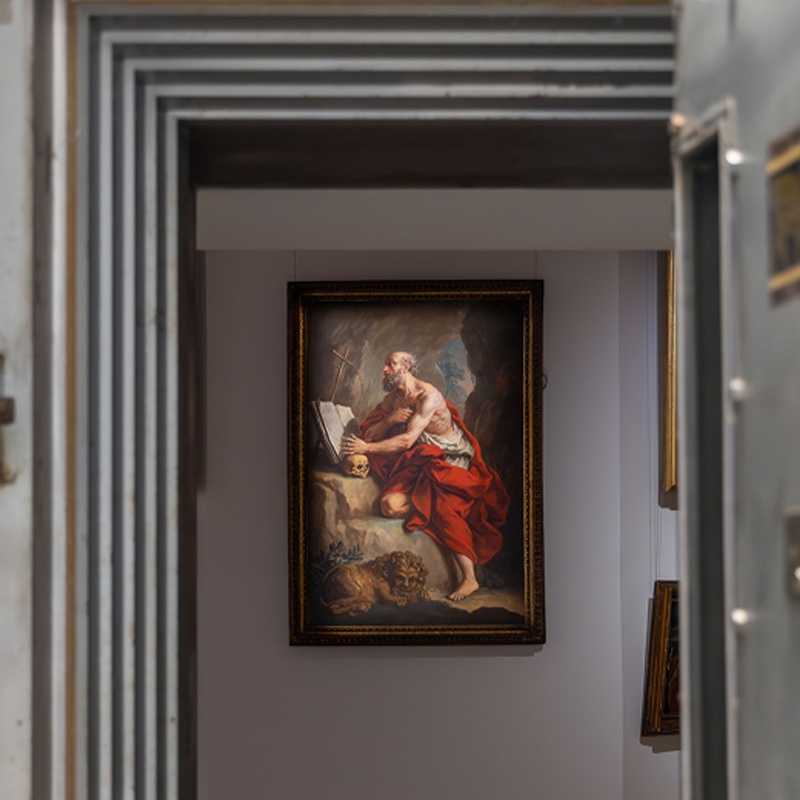
Saint Jerome in the Vault of Museo del Corso – Polo Museale